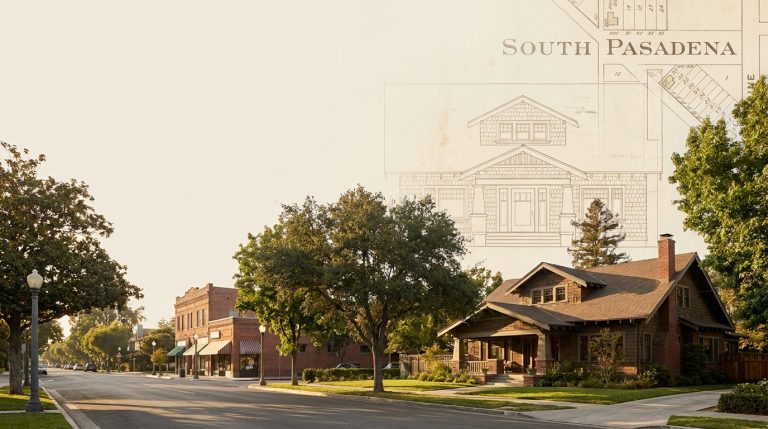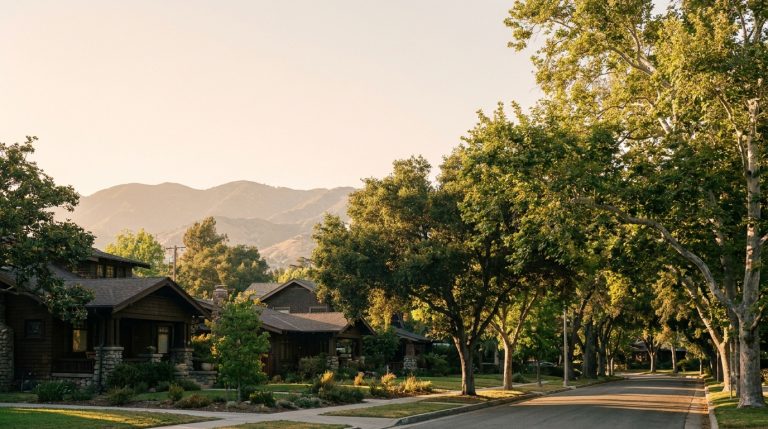
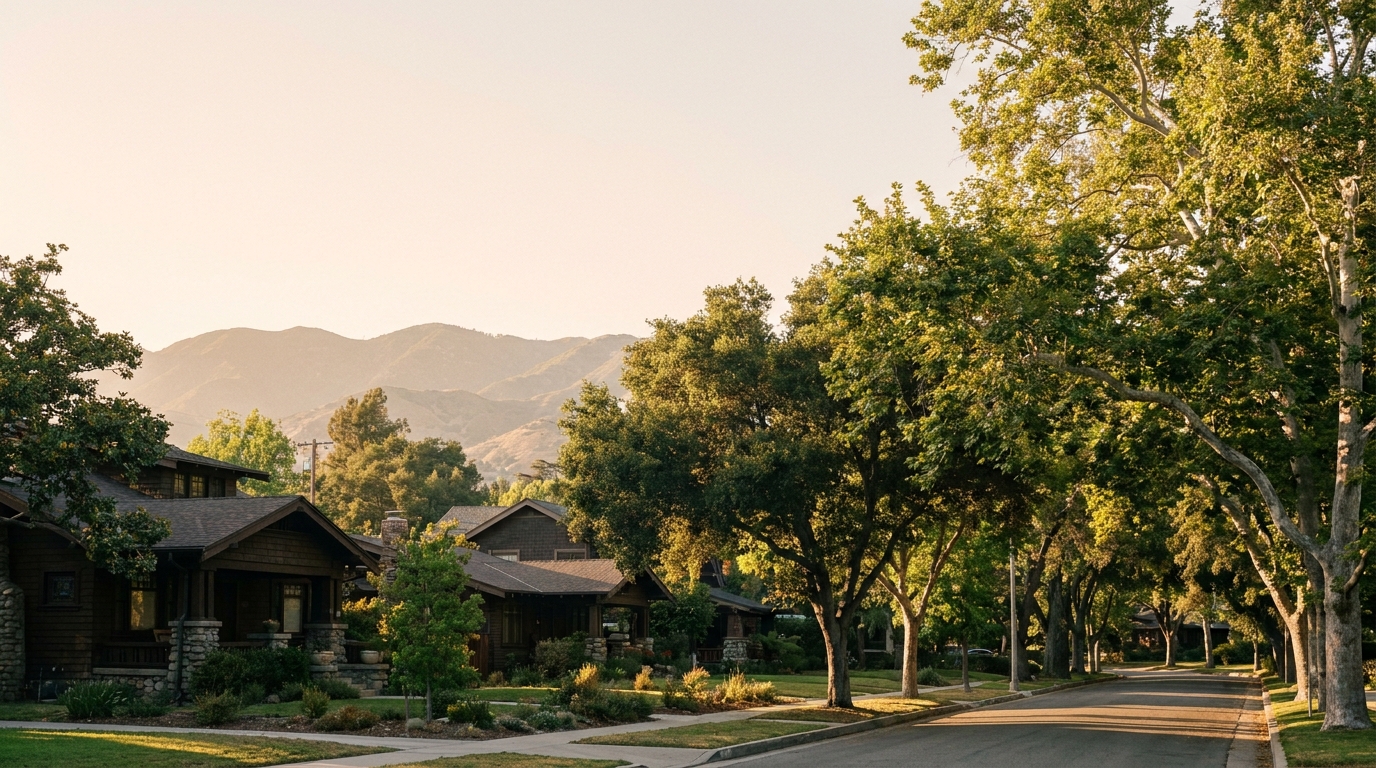
The South Pasadena City of Trees identity is visible almost everywhere. Mature oaks shade residential streets. Magnolias, sycamores, and other established trees frame historic homes. Parks and hillside landscapes add another layer of greenery to a city already known for architecture, preservation, and small-town character.
However, protecting that landscape in 2026 involves more than simply preserving every branch. South Pasadena is also confronting wildfire risk, drought, aging trees, public safety, and the challenge of maintaining vegetation near homes and evacuation routes.
That balance became particularly visible in August 2026, when the City announced a new wildfire resilience strategy for Monterey Hills. Beginning in September, crews are scheduled to trim City-owned trees and trees within public rights-of-way to remove dead, diseased, and overgrown branches.
The work reflects an important change in how residents can think about local preservation. Historic character is not only about buildings. Trees, streetscapes, hillsides, sidewalks, and landscaped neighborhoods also contribute to South Pasadena’s sense of place.
At the same time, those landscapes must be managed so they remain healthy and safe for future generations.
Readers exploring the city’s broader development can also visit our South Pasadena history timeline, architecture and historic homes guide, and historic landmarks collection.
Why the South Pasadena City of Trees Identity Matters
South Pasadena officially describes itself as the “City of Trees,” and the name fits the landscape. The City’s own overview says more than 21,000 trees contribute to the community, while more than 100 acres of parks and playgrounds add additional green space.
These trees are not simply decorative. They help create the visual relationship between historic homes, streets, public spaces, commercial areas, and the surrounding hills.
In many older neighborhoods, mature trees are as important to the streetscape as porches, sidewalks, rooflines, and setbacks. Remove the canopy, and the same collection of historic buildings can feel dramatically different.
The Urban Forest Is Part of South Pasadena’s Historic Character
South Pasadena’s historic identity developed alongside its landscape. As residential neighborhoods expanded during the late nineteenth and early twentieth centuries, streets were laid out, homes were built, gardens matured, and trees became established.
Over decades, those trees helped soften the city’s built environment. They also created shade along sidewalks and gave residential streets the enclosed, intimate feeling that remains recognizable today.
This connection between landscape and architecture is particularly visible around older Craftsman and bungalow neighborhoods. A historic home does not exist in isolation. Its setting can include mature trees, front-yard landscaping, sidewalks, neighboring houses, and the overall rhythm of the street.
Tree-Lined Streets Help Define Historic Neighborhoods
When researching an old photograph of South Pasadena, trees can provide useful historical clues. Their size can suggest how long a street had been landscaped. Changes in species may reveal later planting campaigns. Meanwhile, missing or newly planted trees can show how a neighborhood evolved.
Historic photographs are especially useful for this type of comparison. Researchers can look at the same block across several decades and study how both architecture and vegetation changed.
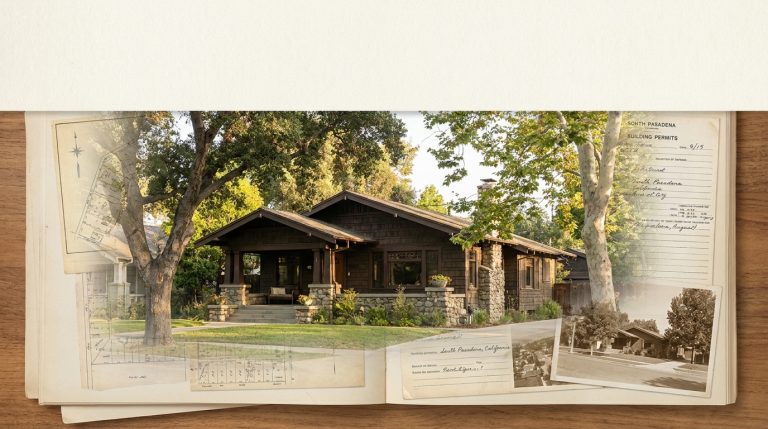
Our South Pasadena photo archives are designed to help readers make those visual connections. Homeowners can also use our guide on researching South Pasadena house history to combine photographs with maps, permits, and other records.
South Pasadena Has Long Protected Its Tree Canopy
The City’s approach to tree protection also reflects how seriously residents value the urban forest. South Pasadena adopted a tree ordinance in 1991 to regulate tree removal and replacement.
Current regulations provide additional protection for mature heritage trees, native species, and oak trees that meet specified size requirements. In many situations, permits are required before protected trees can be pruned or removed.
Replacement requirements can also apply when removal is approved. Therefore, the goal is not simply to regulate individual trees. The broader objective is to maintain the urban canopy that contributes to the city’s environment and visual character.
That preservation mindset resembles South Pasadena’s approach to historic architecture. Change is possible, but significant resources receive additional consideration before they are altered or removed.
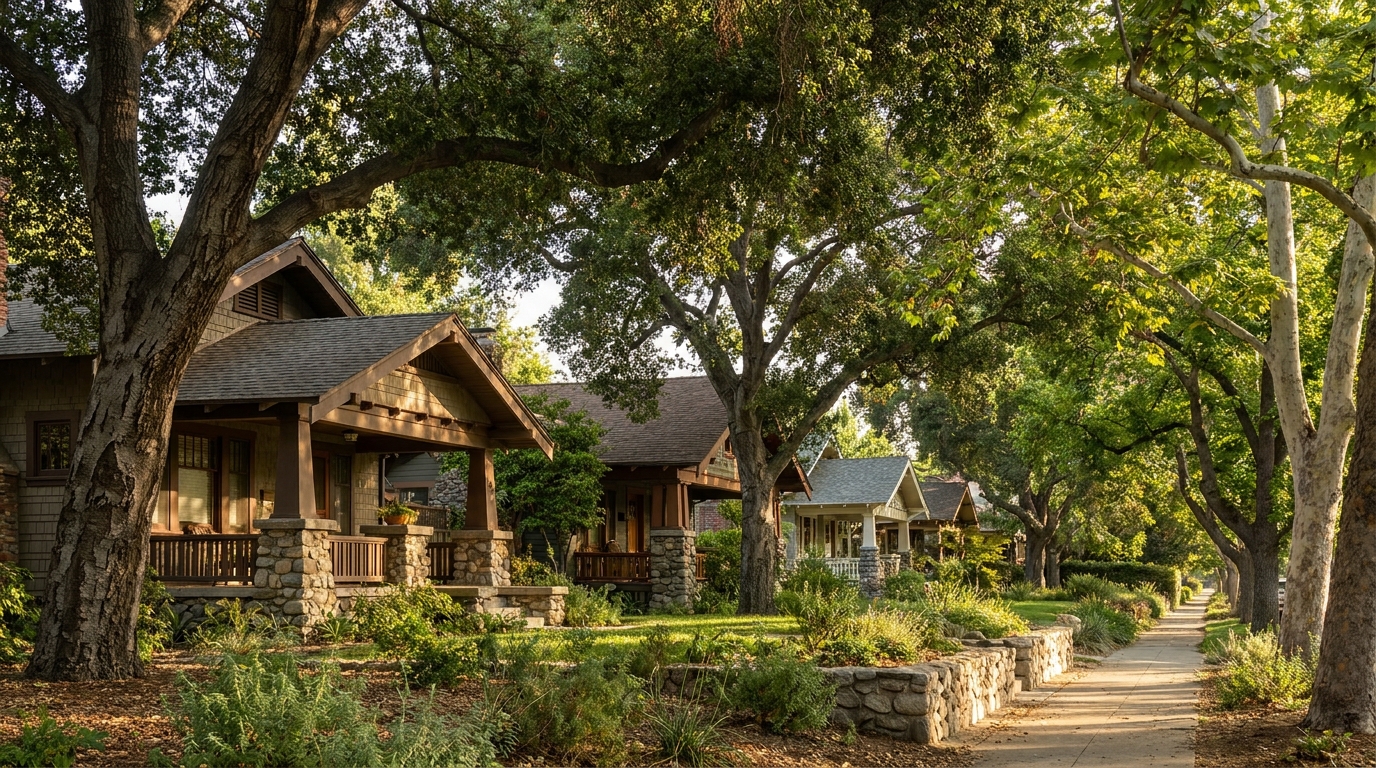
Urban Trees Provide More Than Historic Beauty
The benefits of the urban forest extend beyond appearance. Trees provide shade, help reduce heat around streets and buildings, absorb stormwater, provide wildlife habitat, and contribute to cleaner air.
Those benefits are especially important in a built-up Southern California community. Shade can make sidewalks more comfortable during hot weather. Tree canopy can also reduce the amount of direct sunlight reaching pavement, yards, and structures.
However, healthy urban forestry requires active management. Trees can become diseased. Branches can die or interfere with infrastructure. Roots and limbs can create conflicts, while drought and changing climate conditions can place additional stress on older specimens.
A Healthy Urban Forest Requires Active Management
South Pasadena’s Parks Division manages urban forestry within the public right-of-way. The City says its municipal inventory contains more than 11,000 trees, and contracted arborists perform routine maintenance, trimming, and removal of dead or diseased trees.
The distinction matters. Preservation does not mean leaving trees untouched indefinitely. Professional pruning can improve tree structure, remove dangerous limbs, protect infrastructure, and extend the useful life of healthy trees.
That principle becomes even more important where vegetation meets wildfire-prone hillsides.
How Wildfire Resilience Is Changing Tree Care in 2026
South Pasadena’s tree story took on additional urgency in August 2026. The City announced that it would begin a phased tree-trimming effort in Monterey Hills as part of a broader wildfire resilience strategy.
According to the City’s Fire Hazard Severity Zone map, parts of Monterey Hills fall within both high and very high fire-hazard severity zones. Terrain, vegetation, weather, and other conditions can allow wildfire to spread quickly in these areas.
For residents, that creates a difficult but necessary balance. Mature vegetation contributes to neighborhood beauty and environmental value. Yet dead branches, dense fuels, and vegetation near structures can also increase risk during wildfire conditions.
Monterey Hills Shows How Preservation and Safety Can Work Together
The 2026 strategy does not call for clearing the hills of trees. Instead, the announced program focuses on targeted maintenance.
Beginning in September, crews are expected to remove dead, diseased, and overgrown branches from City-owned trees and trees within public rights-of-way. Branches extending across sidewalks may also be addressed.
The goal is to increase separation between vegetation and possible ignition sources, improve defensible space, reduce combustible material, and help keep emergency response and evacuation routes accessible.
Tree Trimming Is One Part of a Layered Wildfire Strategy
Tree trimming is only one element of the City’s approach. South Pasadena has also identified weed abatement, targeted grazing, and emergency-access improvements as parts of its wildfire resilience work.
This layered model is important because no single action can eliminate wildfire risk. Removing a dead limb may help, but resilience also depends on vegetation around homes, access for firefighters, evacuation planning, maintenance of public land, and actions taken by individual property owners.
The City has encouraged residents to clear dead vegetation, remove combustible materials, maintain appropriate spacing between plants, and manage trees around their own properties.
Residents should still follow local tree regulations before pruning protected trees. The objective is to create safer properties while maintaining healthy, valuable canopy wherever practical.
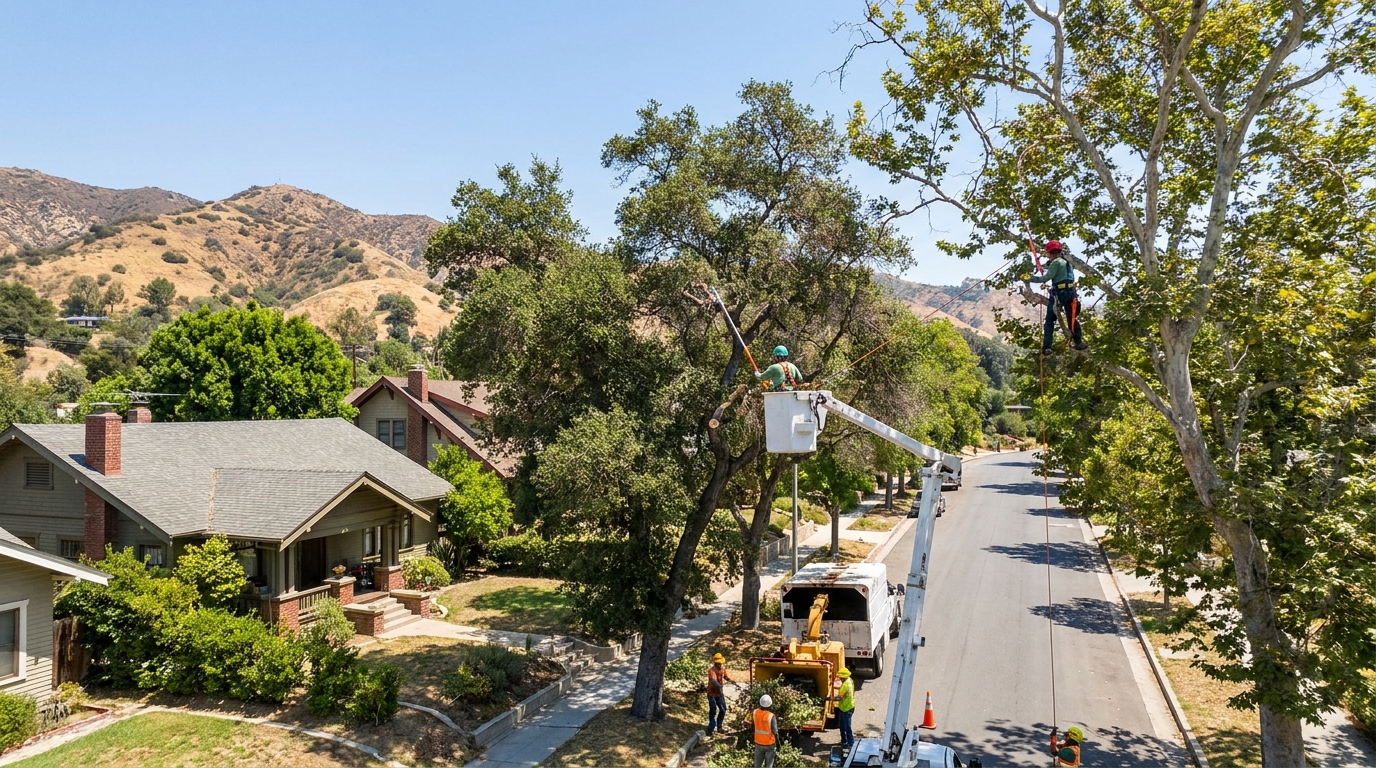
The timing also fits a broader shift in local planning. South Pasadena’s hazard-mitigation work recognizes that wildfire risk in hillside areas can affect not only individual properties but also evacuation routes and the wider community.
That makes urban forestry part of public safety as well as preservation.
For current wildfire-preparedness information and official updates about the Monterey Hills strategy, residents can visit the South Pasadena Fire Department wildfire resources.
The challenge going forward will be maintaining both values at once. South Pasadena should remain recognizable as the City of Trees. However, the canopy also needs to be resilient to drought, fire, disease, heat, and the realities of an aging urban forest.
stewardship
Thoughtful management offers a path between two extremes. Removing healthy trees unnecessarily would weaken neighborhood character and environmental benefits. On the other hand, ignoring hazardous vegetation could put homes, residents, firefighters, and the trees themselves at greater risk.
The strongest approach is therefore stewardship: protect significant trees, plant suitable replacements, maintain healthy canopy, remove dangerous material, and adapt landscaping practices to changing conditions.
That philosophy is closely connected to historic preservation. South Pasadena has spent decades demonstrating that a community can evolve without erasing the qualities that make it distinctive.
The same principle can guide its landscape.
As wildfire resilience work continues in 2026, the City’s famous trees remain both a heritage asset and a living system that requires care. They shade historic homes, shape familiar streets, support wildlife, cool neighborhoods, and help define the experience of living in South Pasadena.
Preserving that legacy means not only protecting trees from development. It also means managing them wisely enough to survive the challenges ahead.
Continue exploring the relationship between landscape and local history through our Mission Street South Pasadena history, architecture and historic homes, and South Pasadena history timeline.