Researching your South Pasadena house history can reveal much more than the year a home was built. With the right records, you may uncover an original architect or builder, former owners and residents, changes to the property, historic photographs, neighborhood development, and clues about why the house looks the way it does today.
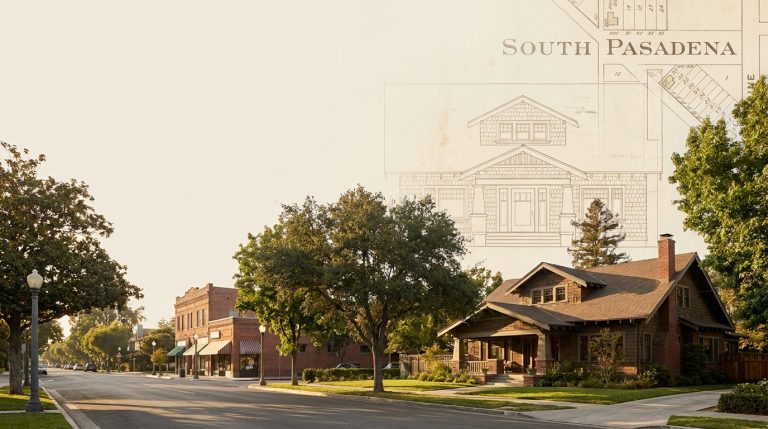
South Pasadena is especially rewarding for property research because many neighborhoods contain homes dating from the late nineteenth and early twentieth centuries. Craftsman houses, bungalows, Spanish-influenced residences, and later architectural styles all reflect different periods in the city’s growth.
Fortunately, researchers do not have to rely on one source. The City of South Pasadena, South Pasadena Public Library, Los Angeles County records, historic maps, directories, newspapers, and photographs can all contribute pieces of the story.
In 2026, researching a property also benefits from improved digital access. South Pasadena introduced a new online building, planning, and public works permitting system in August. However, older property research still requires careful use of historic records rather than depending only on modern permit data.
This guide explains where to start, what each source can tell you, and how to combine the evidence into a reliable history of your home.
Where to Start Your South Pasadena House History Research
The best property research begins with facts you can verify. Start with the current street address, Assessor’s Identification Number, approximate construction date, and any known historic designation. From there, work backward.
A common mistake is to begin with family stories or assumptions about architectural style. Those clues can be useful. However, official records usually provide a stronger foundation.
The City’s South Pasadena research resources page is a useful companion while you work through the process. You may also want to review our South Pasadena architecture and historic homes guide before interpreting architectural features.
Begin With Building Records and Historic Status
South Pasadena’s official house-research guidance recommends checking the City’s Inventory of Historic Resources. This inventory identifies properties that have formal historic significance and can quickly tell you whether a house is already recognized within a local, state, or national historic context.
The City’s Planning Division also maintains a Citywide Historic Context Statement. This document explains development patterns, important periods, property types, and character-defining features from the settlement era through South Pasadena’s mid-century development.
Even if your house is not individually designated, the context statement can help explain when and why its neighborhood developed.
Check the Historic Resources Inventory First
A historic designation can change the direction of your research. A listed property may already have documentation describing its architecture, period of significance, historical associations, or contribution to a district.
South Pasadena also requires Cultural Heritage Commission review for certain exterior alterations, demolition, relocation, and new construction affecting properties on its historic inventory. Therefore, homeowners planning renovations should understand the property’s status before making major exterior changes.
Our historic landmarks in South Pasadena section can help you understand how individual properties fit into the city’s broader preservation story.
Request Historic Building Permit Records
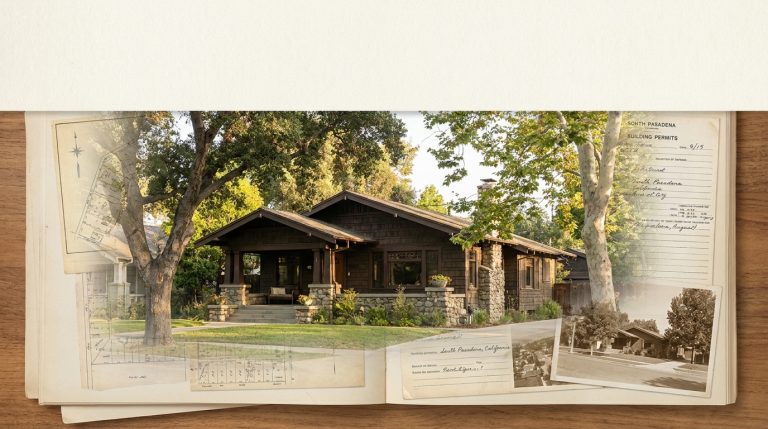
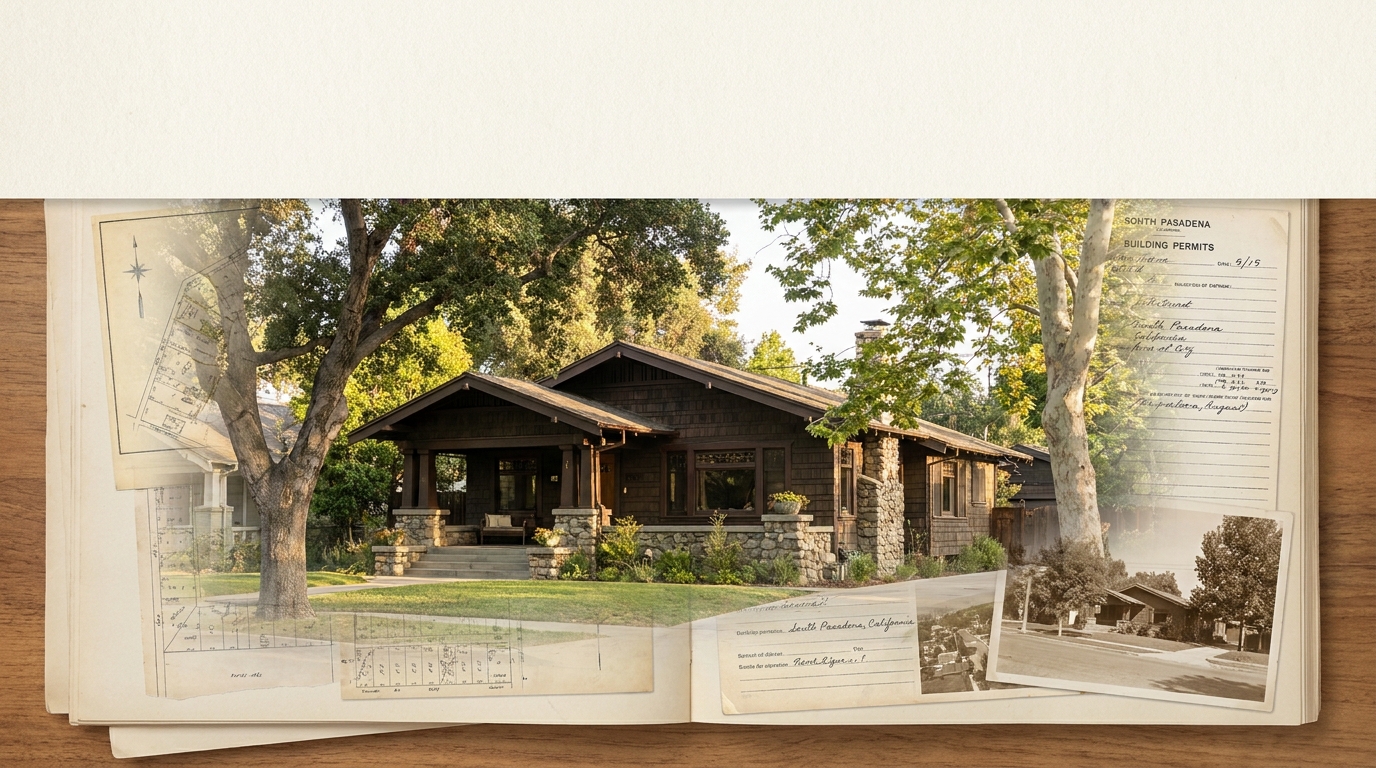
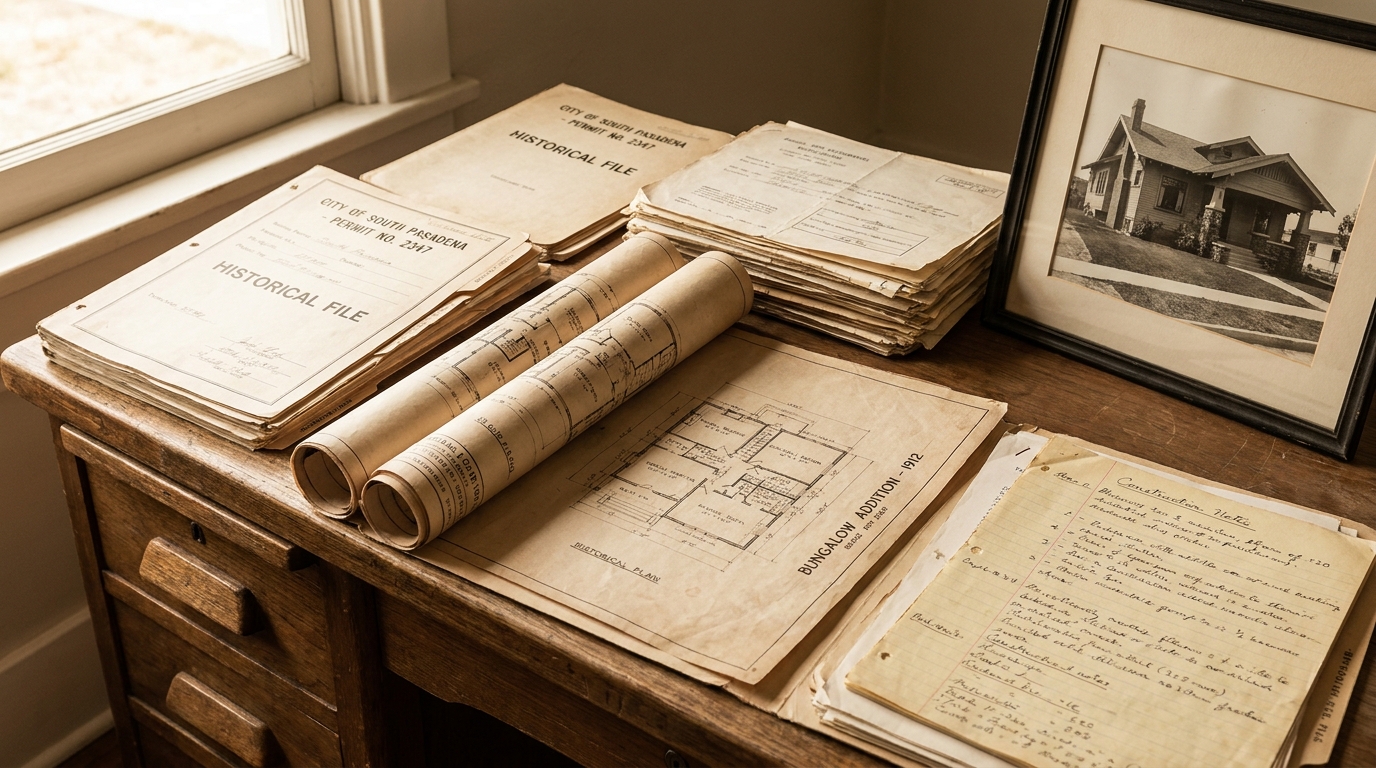
Building permits are among the most useful sources for tracing a house. According to the South Pasadena Public Library’s official house-research guide, permit records may reveal the original construction date and sometimes the architect, contractor, or former owner.
Later permits may show additions, garage construction, remodeling, structural work, or other major alterations. Comparing those dates with the house you see today can help separate original features from later changes.
The City launched a new online permitting platform in August 2026 for current building, planning, public works, tree-trimming, and related applications. Still, researchers seeking historic permits should follow the City’s specific records process and contact the Planning Division when necessary.
Use City Directories to Discover Who Lived in the House
Once you have an approximate construction date, city directories can help connect the building with the people who lived there.
The South Pasadena Public Library maintains city directories dating from 1893 to the present. Directories from 1893 through 1962 have also been digitized. Some years include reverse directories, which are particularly valuable because they allow researchers to search by street address rather than by surname.
That can turn a building into a human story.
For example, once you identify a resident, you can search newspapers, census-related resources, yearbooks, biographical files, or other archives for additional information. You may discover occupations, family connections, civic involvement, business ownership, or notable events associated with the household.
Trace Owners and Residents Separately
Remember that the owner of a house was not always the person who lived there. A property may have been rented, inherited, held by an investor, or occupied by extended family members.
For that reason, ownership and occupancy should be researched separately.
Los Angeles County property records can help establish ownership information. The County Assessor can also provide basic property information such as an approximate construction date and Assessor’s Identification Number.
Meanwhile, deed research through the Los Angeles County Registrar-Recorder/County Clerk can help trace ownership farther back. The City’s house-research guide notes that ownership records can extend to the nineteenth century, although researchers generally need grantor or grantee names rather than simply searching by address.
City directories then help identify the people actually associated with the address during specific years.
This approach is especially useful when researching homes near historically significant areas such as Mission Street in South Pasadena.
Compare Maps, Photographs and Newspapers
Documents provide dates and names. Visual sources can show how the property physically changed.
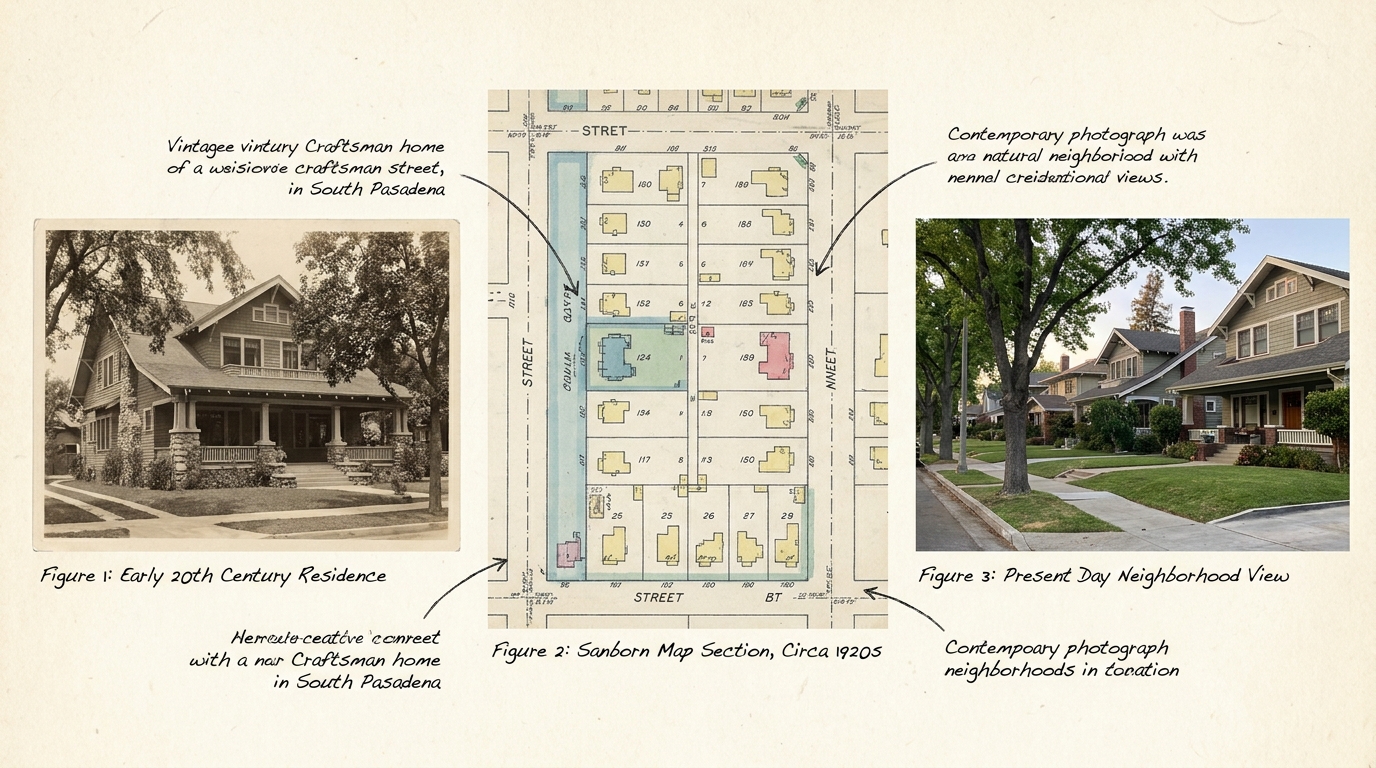
Sanborn Fire Insurance Maps are particularly useful for older properties. These maps were created to document buildings and fire risk. Depending on the year and location, they may show building footprints, construction materials, outbuildings, street layouts, and neighboring structures.
By comparing maps from different dates, researchers can sometimes identify when an addition appeared, when a secondary building was removed, or how the surrounding block changed.
Use Historic Photographs to Confirm the Story
The South Pasadena Public Library maintains a substantial historical photograph collection. More than 2,000 images are available online through its digital collections and Calisphere.
Your exact house may not appear. However, photographs of the street, nearby landmarks, businesses, transportation corridors, schools, or neighboring homes can still provide valuable context.
Look closely at rooflines, porches, windows, street trees, retaining walls, garages, utility poles, sidewalks, and neighboring buildings. Even background details may help date a scene.
Historical newspapers add another layer. The Library preserves local newspaper material dating back to 1893. Search for addresses, owners, architects, construction announcements, real estate advertisements, fires, social events, sales, and neighborhood news.
Readers interested in visual research should also browse our South Pasadena photo archives.
How to Build a Reliable History of Your South Pasadena Home
No single document tells the complete story of a property. A construction date in an assessor record may differ from a permit date. A directory may show a resident but not the legal owner. A photograph may be incorrectly dated. Therefore, strong research compares several independent sources.
Start with the property address and AIN. Then check historic status and building permits. Next, trace owners and occupants. After that, compare maps, photographs, directories, and newspapers. Finally, organize the evidence chronologically.
Keep a record of where every fact came from. Save document titles, dates, page numbers, archive names, and links. Doing so makes it much easier to verify information later.
The South Pasadena Public Library’s Local History Collection is particularly valuable during this process. Its holdings include historical photographs, newspapers, yearbooks, city directories, biographical files, landmark information, maps, and archival collections. The Library also accepts research requests related to houses and genealogy.
For the City’s official step-by-step guidance, visit the South Pasadena Public Library House Research guide.
Property research also connects individual homes with larger city history. A house may reflect the arrival of streetcar transportation, expansion of a neighborhood, growth around Mission Street, or a period of architectural development.
Some properties even connect to major regional events. The decades-long South Pasadena 710 Freeway fight, for example, left numerous homes under Caltrans ownership before the proposed extension was finally abandoned.
Likewise, local institutions can reveal information about former residents and neighborhoods. Our article on South Pasadena Public Library history explains how the Library became one of the city’s most important repositories of community memory.
Ultimately, researching a South Pasadena house is not only about finding an original construction date. It is about understanding how architecture, families, transportation, planning, preservation, and neighborhood change intersect at one address.
Once those pieces come together, an ordinary home can become a remarkably detailed window into South Pasadena’s past.